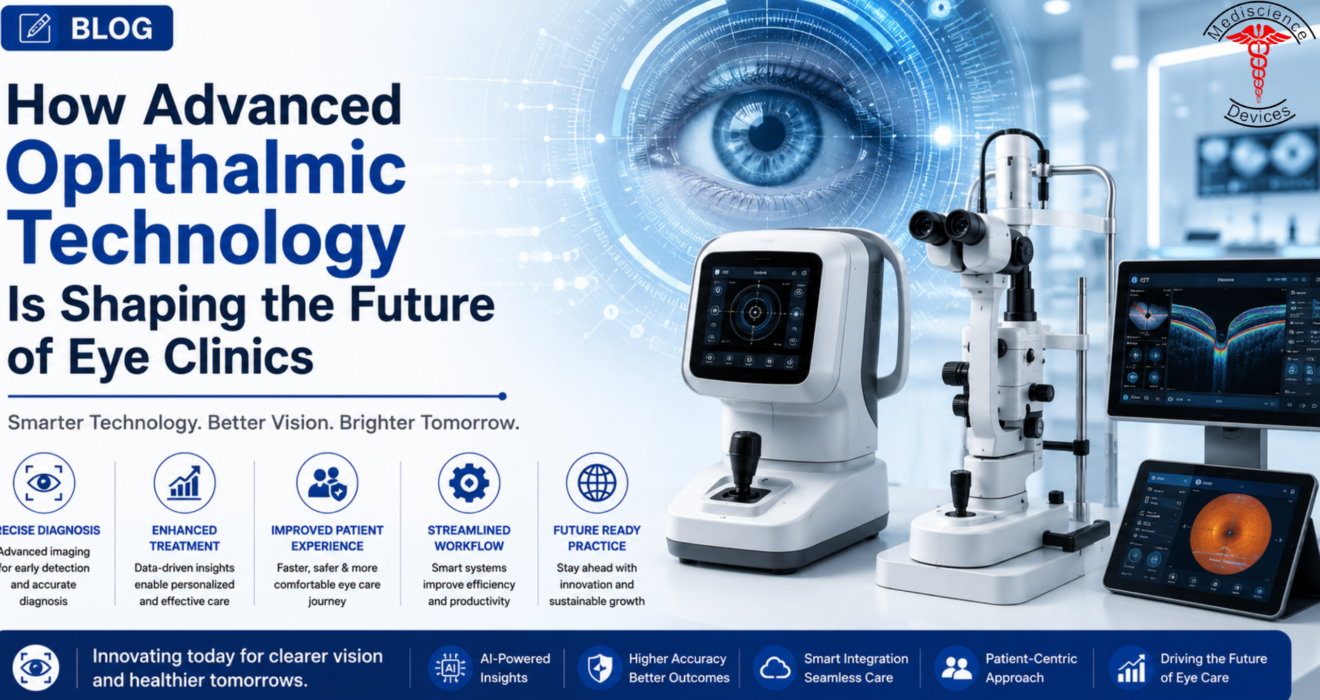
How Advanced Ophthalmic Technology Is Shaping the Future of Eye Clinics
The global ophthalmology landscape is undergoing a profound transformation. Advances in artificial intelligence, digital imaging, portable diagnostics, cloud-based workflows, and integrated clinical systems are redefining how eye care is delivered, documented, and managed.
What was once considered a traditional specialty built around standalone instruments and paper-based records is rapidly evolving into a digitally interconnected ecosystem driven by precision diagnostics, automation, and intelligent decision-making.
For ophthalmologists, hospital administrators, optometrists, and healthcare investors, understanding these technological shifts is no longer optional. The future competitiveness of any eye care practice will increasingly depend on its ability to adopt and integrate advanced ophthalmic technologies.
The emergence of the smart ophthalmology clinic represents a significant milestone in this evolution.
What Is a Smart Ophthalmology Clinic?
Among all medical specialties, ophthalmology generates a substantial volume of structured visual data.
This includes:
- Retinal images
- OCT scans
- Corneal topography maps
- Visual field analyses
- Fundus photographs
- Biometric measurements
- Refraction data
The digital nature of these datasets makes ophthalmology uniquely positioned to benefit from technological integration.
As computational capabilities improve, ophthalmic devices increasingly function as intelligent diagnostic systems rather than simple measurement tools.
This transformation is driving unprecedented advancements in diagnostic precision and disease detection.
Artificial Intelligence in Ophthalmology
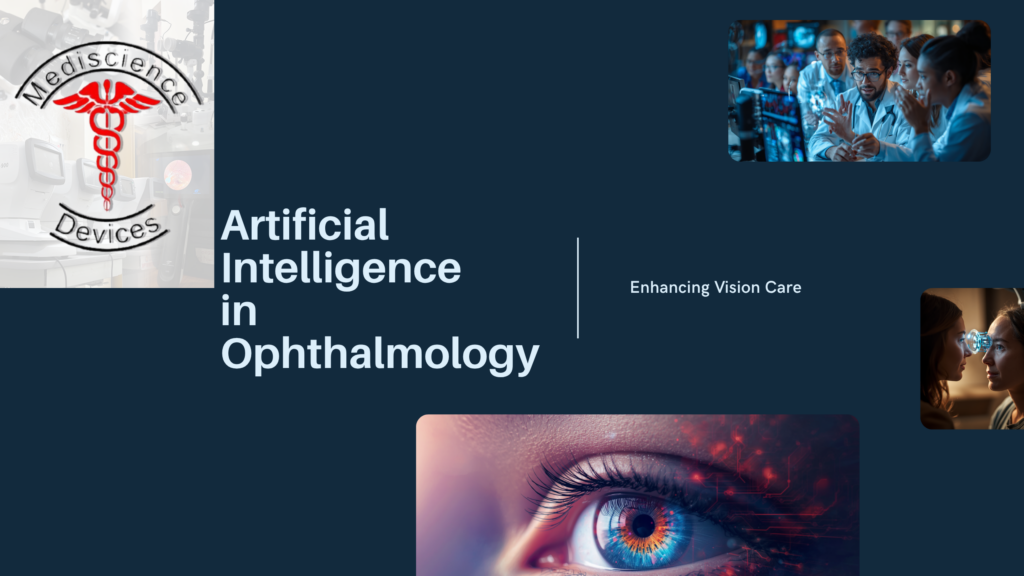
From Image Analysis to Clinical Decision Support
Artificial intelligence (AI) is rapidly becoming one of the most influential forces in ophthalmology innovation.
Modern AI algorithms can analyze retinal images and identify pathological changes with remarkable accuracy.
Current applications include:
- Diabetic retinopathy screening
- Glaucoma risk assessment
- Age-related macular degeneration detection
- Retinal lesion identification
- Referral triage systems
- Disease progression monitoring
AI does not replace ophthalmologists. Instead, it enhances clinical decision-making by identifying subtle patterns that may not be immediately apparent during routine examinations.
This technology is particularly valuable in:
- High-volume screening programs
- Rural healthcare systems
- Teleophthalmology networks
- Preventive eye care initiatives
As machine learning models continue to improve, AI-assisted diagnostics will become increasingly integrated into routine ophthalmic workflows.
Digital Ophthalmic Devices and Connected Diagnostics
Modern eye clinics are increasingly investing in digital ophthalmic devices capable of sharing data across multiple platforms.
Examples include:
- Digital fundus cameras
- Auto refractometers
- Optical coherence tomography systems
- Digital slit lamps
- Portable B-scan ultrasound devices
- Wireless rebound tonometers
These devices generate structured digital datasets that can be stored, analyzed, and shared instantly.
Benefits include:
- Faster diagnosis
- Improved documentation
- Enhanced referral communication
- Better longitudinal disease monitoring
- Reduced data loss
- Streamlined patient management
The transition from analog to digital diagnostics is one of the most significant trends shaping modern ophthalmology.
Ophthalmic Workflow Optimization Through Technology
Improving Clinical Efficiency Without Compromising Quality
One of the greatest challenges facing eye clinics today is balancing patient volume with diagnostic accuracy.
Integrated technology helps address this challenge through ophthalmic workflow optimization.
Smart workflows can reduce:
- Administrative burden
- Patient waiting time
- Duplicate testing
- Documentation errors
- Equipment bottlenecks
Integrated systems enable clinicians to move seamlessly between diagnostic stations while maintaining complete access to patient information.
This creates a more efficient and patient-centered clinical environment.
Cloud-Based Ophthalmology and Data Accessibility
Cloud infrastructure is transforming how ophthalmic data is stored and accessed.
Modern cloud-connected systems enable:
- Remote image review
- Multi-location clinic integration
- Secure patient data storage
- Collaborative consultation
- Real-time reporting
- Telemedicine support
For multi-location eye hospitals and growing ophthalmology practices, cloud integration improves operational scalability while reducing infrastructure complexity.
Teleophthalmology and the Future of Eye Care Access
Teleophthalmology has emerged as one of the most impactful innovations in modern eye care.
By combining digital imaging, cloud connectivity, and remote specialist consultation, teleophthalmology enables:
- Earlier disease detection
- Faster referrals
- Improved rural healthcare access
- More efficient specialist utilization
This approach is particularly valuable in regions where ophthalmologist availability remains limited.
Future teleophthalmology platforms will increasingly incorporate AI-assisted triage and automated image analysis to further improve efficiency.
Smart Clinics and Predictive Ophthalmology
The next generation of ophthalmic technology will move beyond diagnosis toward prediction.
Emerging technologies are being developed to:
- Predict glaucoma progression
- Assess diabetic retinopathy risk
- Forecast treatment response
- Identify disease trends earlier
Predictive ophthalmology has the potential to shift eye care from reactive treatment to proactive prevention.
This represents one of the most exciting frontiers in ophthalmic innovation.
Why Service Infrastructure Remains Critical in High-Tech Eye Clinics
As diagnostic systems become more sophisticated, technical support becomes increasingly important.
Advanced ophthalmic technologies require:
- Calibration
- Software updates
- Network integration
- Preventive maintenance
- Troubleshooting support
Clinics should evaluate whether ophthalmology equipment suppliers provide:
- Regional service coverage
- Technical expertise
- Installation assistance
- Long-term maintenance support
- Workflow consultation
Technology is only as reliable as the support system behind it.
What Eye Clinics Should Consider Before Investing in New Technology
Before adopting advanced systems, clinics should evaluate:
Clinical Relevance
Will the technology improve patient care and diagnostic accuracy?
Integration Capability
Can the device communicate with existing systems?
Scalability
Will it support future growth?
Service Support
Is regional technical support available?
Return on Investment
Will the technology improve efficiency, productivity, or patient outcomes?
Successful technology adoption requires strategic planning rather than simply following market trends.
Why Mediscience Devices Supports the Future of Smart Ophthalmology
At Mediscience Devices, we recognize that the future of ophthalmology lies at the intersection of diagnostic precision, digital integration, and workflow efficiency.
We support eye clinics, hospitals, and healthcare institutions with advanced ophthalmic solutions including:
- Digital fundus cameras
- Portable diagnostic devices
- Auto refractometers
- Slit lamp systems
- B-scan ultrasound solutions
- Ophthalmic workflow infrastructure
Alongside equipment supply, we emphasize technical guidance, servicing support, and long-term reliability to help clinics build future-ready diagnostic ecosystems.
Final Thoughts
The future of ophthalmology is becoming increasingly intelligent, connected, and data-driven.
Artificial intelligence, portable diagnostics, digital imaging, teleophthalmology, and integrated clinical workflows are reshaping how eye care is delivered across the world.
For eye clinics and healthcare institutions, adopting advanced ophthalmic technology is not simply about modernization—it is about improving diagnostic accuracy, operational efficiency, and patient outcomes.
The smart ophthalmology clinic is no longer a vision of the future. It is rapidly becoming the new standard of care.
Check Mediscience Devices' product catalogue. Connect with Mediscience Devices today.
Frequently Asked Questions (FAQ)
A smart ophthalmology clinic uses integrated digital technologies, AI-assisted diagnostics, cloud connectivity, and automated workflows to improve patient care and operational efficiency.
AI is used for retinal image analysis, diabetic retinopathy screening, glaucoma risk assessment, disease monitoring, and clinical decision support.
Digital devices improve diagnostic accuracy, streamline workflows, enhance documentation, and support teleophthalmology integration.
Teleophthalmology improves access to specialist care by enabling remote consultations, image sharing, and faster referral pathways.
Integrated workflows reduce inefficiencies, improve data accessibility, enhance patient experience, and support long-term clinic scalability.