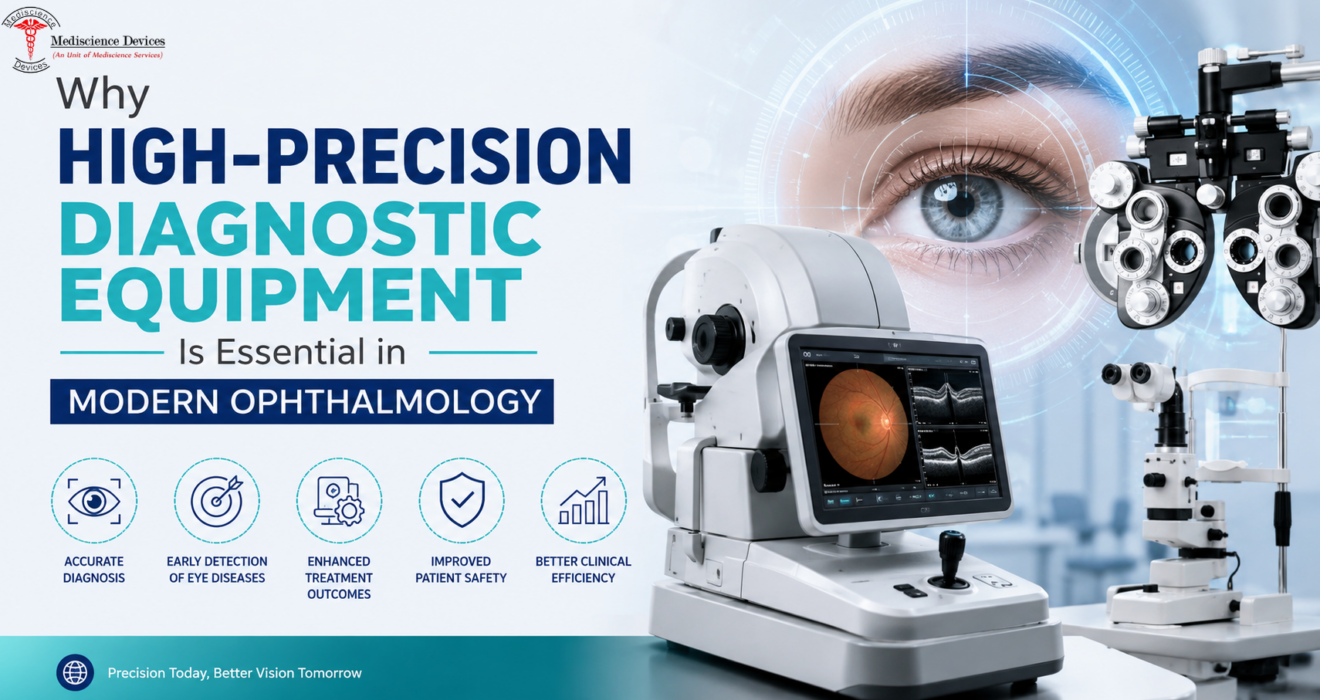
Why High-Precision Diagnostic Equipment Is Essential in Modern Ophthalmology
The practice of ophthalmology has evolved dramatically over the last two decades. With advancements in retinal imaging, anterior segment analysis, refractive diagnostics, and digital ophthalmic workflows, clinicians today have access to diagnostic capabilities that were previously unimaginable.
However, the value of these technological innovations depends on one critical factor: diagnostic precision.
In modern eye care, accurate diagnosis is the foundation upon which every clinical decision is built. Whether managing glaucoma, diabetic retinopathy, cataracts, keratoconus, retinal vascular diseases, or refractive errors, the quality of patient outcomes depends heavily on the accuracy and reliability of ophthalmic diagnostic equipment.
For ophthalmologists, optometrists, retina specialists, and healthcare institutions, investing in high-quality diagnostic systems is not simply a matter of convenience—it is a prerequisite for delivering evidence-based clinical care.
What Does Diagnostic Precision Mean in Ophthalmology?
Diagnostic precision refers to the ability of a device to consistently generate accurate, reproducible, and clinically meaningful measurements.
In ophthalmology, even minor measurement errors can significantly influence:
- Diagnosis accuracy
- Disease staging
- Treatment planning
- Surgical outcomes
- Follow-up monitoring
- Long-term disease management
Examples include:
- A small variation in intraocular pressure measurements affecting glaucoma assessment
- Inaccurate keratometry impacting IOL calculations
- Poor retinal imaging leading to missed pathology
- Refractive measurement inconsistencies affecting visual outcomes
As ophthalmic diseases become increasingly complex, precision diagnostics become even more critical.
The Relationship Between Diagnostic Accuracy and Patient Outcomes
Modern ophthalmology relies heavily on objective measurements.
Unlike many medical specialities that depend primarily on symptom interpretation, ophthalmology frequently requires quantitative data for diagnosis and management.
Examples include:
Glaucoma Management
Successful glaucoma management depends on:
- Accurate intraocular pressure measurements
- Optic nerve assessment
- Visual field analysis
- Retinal nerve fiber layer evaluation
Even minor diagnostic inconsistencies can affect treatment decisions and long-term disease progression monitoring.
Diabetic Retinopathy Screening
Early diabetic retinopathy often presents with subtle retinal changes.
High-quality imaging systems are essential for identifying:
- Microaneurysms
- Retinal hemorrhages
- Exudates
- Macular edema
- Neovascularization
This makes digital fundus cameras and advanced retinal imaging systems indispensable tools in modern eye care.
Cataract Surgery Planning
Cataract surgery has evolved into a highly refractive procedure.
Accurate measurements are necessary for:
- IOL power calculations
- Corneal curvature analysis
- Axial length determination
- Astigmatism management
Diagnostic precision directly influences postoperative visual outcomes.
The Role of Autorefractometers in Precision Diagnostics
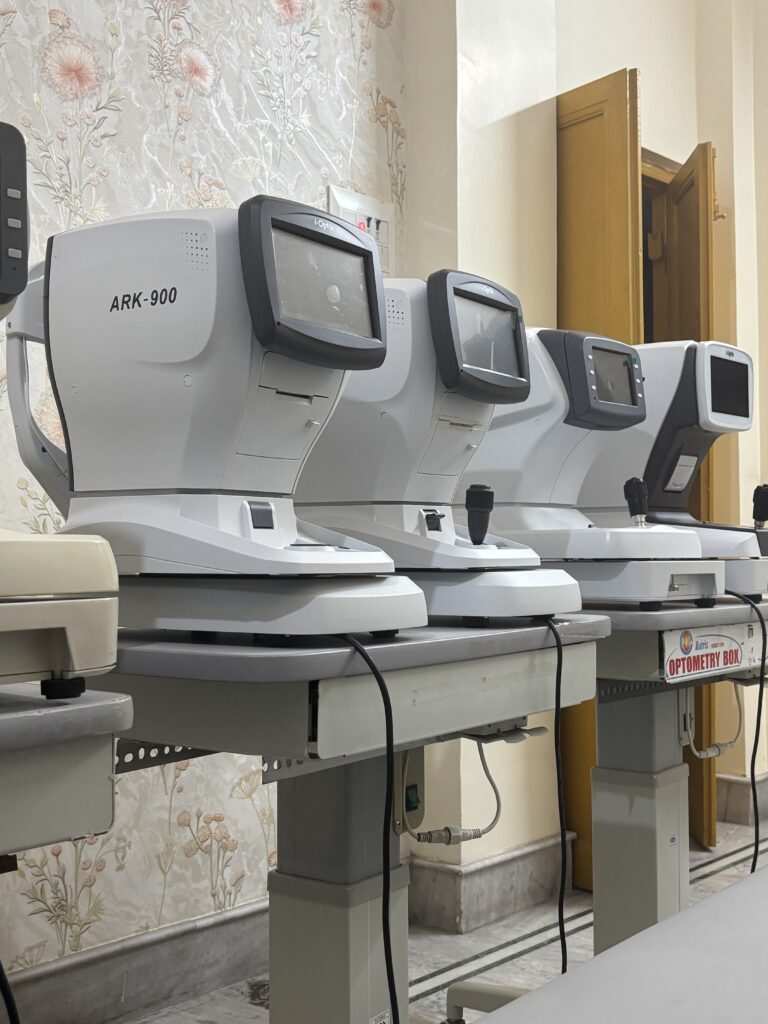
The modern autorefractometer machine remains one of the most frequently utilized diagnostic devices in ophthalmology and optometry.
Although often viewed as a routine examination tool, its clinical importance should not be underestimated.
High-quality autorefractometers provide:
- Accurate refractive measurements
- Keratometric analysis
- Faster patient throughput
- Repeatable clinical data
- Reduced operator variability
Advanced systems now utilize:
- Infrared measurement technology
- Automated alignment systems
- Multi-point analysis
- Digital workflow integration
These features improve both diagnostic consistency and operational efficiency.
Why Slit Lamp Technology Remains the Gold Standard

Despite advances in digital diagnostics, the slit lamp microscope remains one of the most important instruments in ophthalmology.
Its versatility allows clinicians to evaluate:
- Corneal pathology
- Lens changes
- Anterior chamber abnormalities
- Conjunctival disease
- Eyelid disorders
- Contact lens-related complications
Modern slit lamp systems now incorporate:
- Digital imaging
- HD camera integration
- Documentation software
- Teleophthalmology compatibility
The quality of optics and illumination remains critical in achieving reliable clinical examinations.
Digital Fundus Cameras and Retinal Imaging Precision
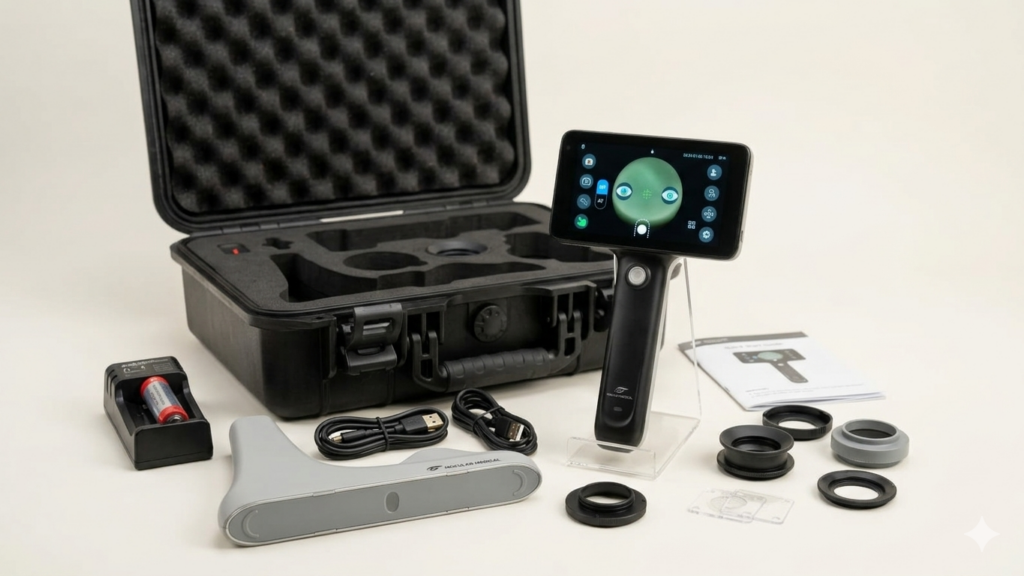
Retinal imaging has transformed the early detection and monitoring of numerous ocular and systemic diseases.
Modern digital fundus cameras provide:
- High-resolution retinal imaging
- Documentation capabilities
- Disease progression monitoring
- Teleophthalmology integration
- AI-assisted analysis compatibility
Fundus imaging plays a crucial role in:
Diabetic Eye Disease
Routine retinal imaging helps detect pathology before significant visual loss occurs.
Glaucoma Monitoring
Optic disc documentation assists in long-term disease assessment.
Hypertensive Retinopathy
Retinal vascular changes provide valuable information regarding systemic disease progression.
Macular Disorders
Precise imaging allows earlier identification of retinal abnormalities requiring intervention.
Advanced Ophthalmic Imaging Systems and Modern Clinical Practice
The demand for advanced ophthalmic imaging systems continues to grow as diagnostic expectations increase.
Examples include:
- Optical Coherence Tomography (OCT)
- OCT Angiography
- Corneal Topography
- Specular Microscopy
- Ultrasound Biomicroscopy
- B-Scan Ultrasonography
These technologies provide clinicians with unprecedented diagnostic detail.
For postgraduate ophthalmology practitioners, understanding image interpretation has become just as important as performing clinical examinations.
How Precision Diagnostics Improve Workflow Efficiency
Diagnostic accuracy is not solely about clinical outcomes.
It also influences operational performance.
Reliable eye clinic diagnostic devices contribute to:
- Faster patient evaluations
- Reduced repeat testing
- Better documentation
- Improved referral communication
- Increased patient confidence
- Enhanced clinical productivity
High-volume clinics particularly benefit from standardized diagnostic workflows.
The Emerging Role of Artificial Intelligence in Ophthalmic Diagnostics
Artificial intelligence is increasingly being integrated into ophthalmology technology.
AI-assisted diagnostic systems are now capable of supporting:
- Diabetic retinopathy screening
- Glaucoma risk assessment
- Retinal pathology detection
- Image quality enhancement
- Clinical triage workflows
Although AI cannot replace clinical judgment, it can significantly enhance diagnostic efficiency when paired with high-quality imaging systems.
The future of ophthalmology will likely involve deeper integration between precision diagnostics and machine learning technologies.
Why Equipment Quality Matters More Than Specifications Alone
When evaluating ophthalmic diagnostic equipment, many clinics focus exclusively on technical specifications.
However, true clinical value depends on:
- Optical quality
- Calibration stability
- Software reliability
- Service support
- Workflow integration
- Long-term performance consistency
Two devices may appear similar on paper but deliver significantly different clinical experiences.
This is why selecting the right ophthalmic instrument company is a strategic decision rather than a simple purchasing exercise.
The Importance of Service Support and Calibration
Diagnostic precision cannot be maintained without proper servicing.
Routine maintenance ensures:
- Calibration accuracy
- Sensor performance
- Optical clarity
- Mechanical stability
- Software optimization
Eye clinics should always evaluate whether an equipment supplier provides:
- Regional service support
- Preventive maintenance
- Calibration assistance
- Spare parts availability
- Technical training
Long-term reliability depends as much on service infrastructure as it does on equipment quality.
Why Mediscience Devices Supports Precision-Driven Ophthalmology
At Mediscience Devices, we understand that precision is at the heart of modern eye care.
We support ophthalmologists, hospitals, and eye clinics with advanced ophthalmic diagnostic equipment designed to improve clinical confidence and workflow efficiency.
Our portfolio includes:
- Auto refractometers
- Slit lamp systems
- Digital fundus cameras
- Portable diagnostic devices
- Ophthalmic imaging solutions
- Clinical workflow infrastructure
Alongside equipment supply, we emphasize technical guidance, servicing support, and long-term reliability to help healthcare professionals maintain the highest diagnostic standards.
Final Thoughts
The future of ophthalmology is increasingly dependent on diagnostic precision.
As eye care becomes more data-driven, clinicians require diagnostic systems capable of delivering consistent, accurate, and reproducible results.
From autorefractometers and slit lamps to fundus cameras and advanced imaging platforms, high-quality ophthalmic diagnostic equipment forms the foundation of evidence-based patient care.
For clinics, hospitals, and ophthalmologists seeking to improve outcomes, investing in precision diagnostics is not merely an operational decision—it is a commitment to clinical excellence.
Check Mediscience Devices' product catalogue. Connect with Mediscience Devices today.
Frequently Asked Questions (FAQ)
Diagnostic precision refers to the ability of ophthalmic equipment to provide accurate, repeatable, and clinically reliable measurements that support informed clinical decision-making.
Digital fundus cameras enable detailed retinal imaging, disease documentation, teleophthalmology integration, and long-term monitoring of retinal conditions.
Modern autorefractometers provide rapid, repeatable refractive measurements while reducing operator dependency and improving patient throughput.
Regular calibration ensures measurement accuracy, maintains diagnostic reliability, and reduces the risk of clinical errors.
Clinics should evaluate product quality, diagnostic performance, service infrastructure, calibration support, installation assistance, and long-term technical reliability before selecting an equipment partner.